

Generic output is almost always a prompting problem, not a tool problem — AI prompts for marketing content need more structure than a quick "write me a post about X," and the gap between the two is usually the difference between a usable first draft and a full rewrite. Anthropic’s own prompt engineering documentation is clear on this: providing a few well-chosen examples dramatically improves accuracy and consistency, especially for content that needs to follow a specific format or tone.
This guide applies that principle specifically to marketing: blog posts, social captions, email copy, and ad copy, with prompt structures you can reuse every time.
Why Marketing Prompts Need More Structure Than a Quick Ask
Marketing content has to do two things at once — sound like your brand and fit a specific format constraint (character limits, a subject line, a CTA). A vague prompt leaves both of those to chance, which is exactly why marketing teams tend to see the most generic-sounding AI output of any department.
The fix isn’t a longer prompt — it’s a more complete one, built around the same core pieces every time: tone, format, and a real example to anchor it.
How to Write AI Prompts for Marketing Content
- State the format explicitly. "A 150-word blog intro" gets a very different result than an unbounded request.
- Include your brand tone in the prompt itself, not just once at the start of a conversation.
- Paste in a real example of content you’ve actually published and liked.
- Specify the CTA or goal the piece needs to accomplish, not just the topic.
- Ask for options, not one final answer — three headline variations beats one you have to reprompt for.
AI Prompts for Marketing Content, by Format
Blog Post Intros and Outlines
Rather than "write a blog post about X," specify the angle, the reader’s likely question, and the tone: "Write a 150-word intro for a blog post about [topic], opening with a specific pain point, for an audience of small business owners, in a direct, non-hype tone." This is one of the clearest examples of how ai prompts for marketing content improve with a small amount of upfront structure.
Social Media Captions
Social prompts benefit from an explicit character limit and platform context: "Write 3 LinkedIn caption options, under 200 characters each, for [topic], ending with a question to drive comments." Asking for multiple options in one prompt saves the back-and-forth of regenerating one at a time.
Email Subject Lines and Body Copy
Email prompts perform best when you separate the subject line request from the body copy request, and specify the single goal of each: "Write 5 subject line options under 50 characters for an email announcing [update], optimized for open rate, avoiding spammy phrasing."
Ad Copy With Character Constraints
Ad platforms enforce hard character limits, so put them directly in the prompt rather than editing down afterward: "Write 3 headline options under 30 characters and 2 description options under 90 characters for a Google ad promoting [offer]." Specifying the constraint upfront avoids the most common source of wasted revisions in ai prompts for marketing content specifically.
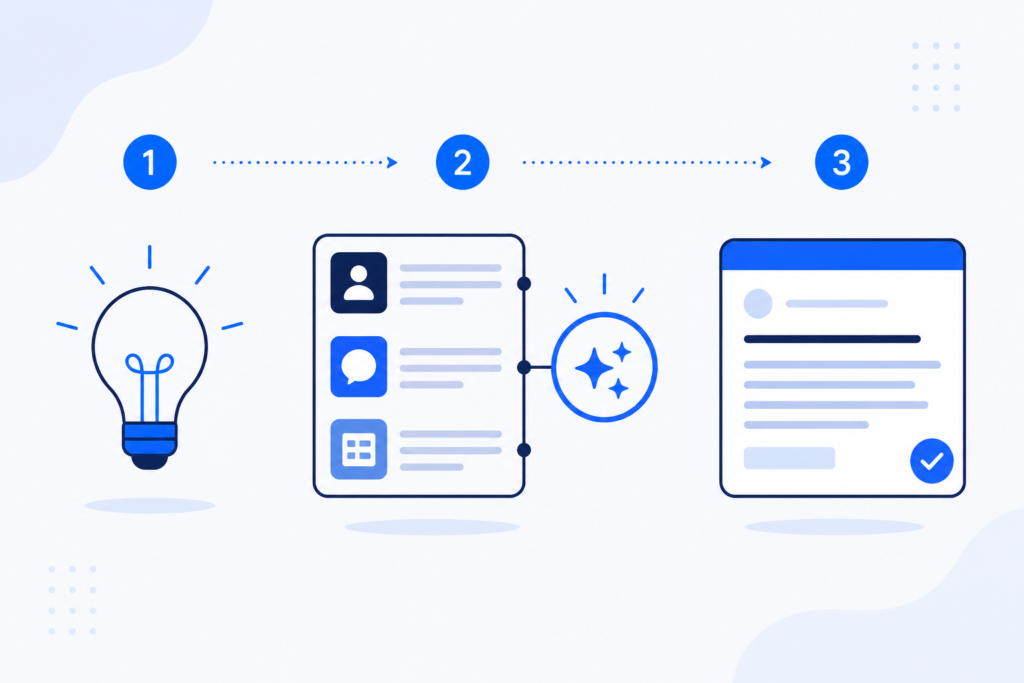
From Idea to On-Brand Marketing Copy
Here’s what that structured path from a rough idea to a finished, on-brand piece of content actually looks like in practice.
| Content Type | Key Prompt Element | Common Mistake to Avoid |
|---|---|---|
| Blog intros | Specific angle + reader pain point | No topic-only requests |
| Social captions | Character limit + platform | Regenerating one at a time |
| Email copy | Separate subject line from body | Combining both in one ask |
| Ad copy | Hard character constraints upfront | Editing down after the fact |
Common Mistakes When Prompting for Marketing Content
- Asking for a finished piece without a tone or format anchor, then wondering why it sounds generic.
- Not including a real past example when tone consistency actually matters.
- Requesting one option instead of a few variations to choose from.
- Leaving out character or word limits for platforms that enforce them strictly.
- Re-explaining brand voice every single time instead of saving it as reusable context.
Frequently Asked Questions
What’s the biggest mistake in AI prompts for marketing content?
Leaving out format and tone constraints. A prompt that only states the topic leaves the model to guess at both, which is the most common reason marketing output comes back sounding generic.
Should I include my brand voice in every single prompt?
Ideally, save it once as reusable context (a Project, custom instructions, or a pinned reference) rather than retyping it — but if that’s not available, yes, restate it briefly each time for consistency.
How many content variations should I ask for at once?
Two to three is usually the sweet spot — enough to choose from without spending more time reviewing options than a single strong draft would take.
Conclusion
Better ai prompts for marketing content come down to the same handful of additions every time: explicit format, real tone examples, and a clear goal for the piece. Apply that structure to whichever content type you write most often, and the quality gap closes fast. For the broader framework these techniques come from, see our pillar guide on how to write better AI prompts for business.
📌 This article is part of our AI Guides & Tutorials series on prompt engineering. It supports our pillar guide, How to Write Better AI Prompts for Business, and pairs with AI Prompts for Data Analysis and Reports for the analytical side of the same skill.