
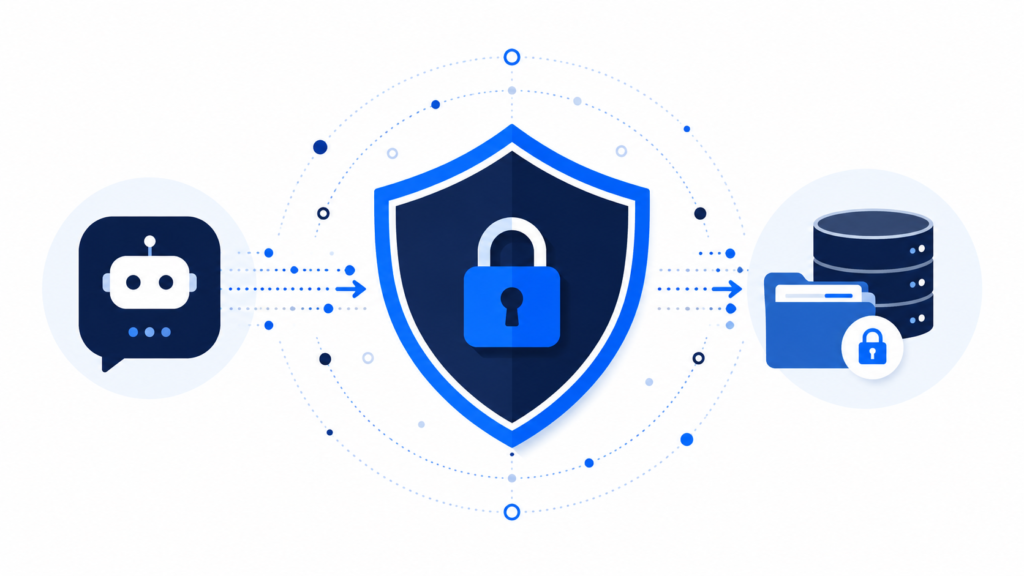
Getting this wrong is expensive, not just risky. Learning how to protect business data when using AI tools has become urgent for a specific financial reason: IBM’s Cost of a Data Breach research found that AI-related breaches now cost organizations over $6.5 million on average — a 22% premium over traditional breach costs, driven largely by slower detection and containment. The timing matters too: the EU AI Act moves into a major new enforcement phase in August 2026, adding real regulatory weight to a problem many businesses have been treating informally.
This guide covers the practical steps that actually reduce risk — not a compliance lecture, but the specific choices that matter before your team pastes another sensitive document into a chat window.
Why This Matters More Now Than It Did Last Year
AI tools moved from novelty to daily habit faster than most company policies could keep up. Research on enterprise AI usage consistently finds a large share of employees have pasted company information into AI or LLM services — usually without malicious intent, simply trying to get their job done faster.
That gap between fast adoption and slow governance is exactly where risk accumulates. It’s rarely one dramatic incident — it’s small, repeated exposures that add up until a regulator, a customer, or a breach forces the issue.
How to Protect Business Data When Using AI Tools
- Know which tier you’re actually using. Free consumer AI accounts and enterprise tiers handle data very differently.
- Check for a Data Processing Agreement (DPA) before connecting any tool to customer or financial data.
- Define what should never be pasted in, regardless of which tool or tier is being used.
- Use technical controls where available, not just a written policy nobody enforces.
- Train the team before an incident happens, not as a reaction to one.
5 Steps to Protect Business Data When Using AI Tools
Choose Enterprise Tiers Over Free Consumer Accounts
Free, consumer-facing AI accounts frequently differ from business-tier plans in one critical way: what happens to your data afterward. Enterprise and business plans typically exclude your conversations from model training by default; free consumer tiers often don’t make that same guarantee. This single choice is one of the fastest ways to protect business data when using AI tools without changing anything else about your workflow.
Understand What a Data Processing Agreement Actually Covers
A DPA formalizes how a vendor handles data on your behalf and is usually required for GDPR compliance when personal data is involved. Enterprise AI customers can typically execute one directly with the vendor — if a tool doesn’t offer one, that’s a meaningful signal about how seriously it takes business data handling.
Set Clear Limits on What Gets Pasted In
Not every AI interaction carries the same risk. Drafting generic marketing copy is low-stakes; pasting a customer’s financial records or unreleased source code is not. Defining these categories explicitly — rather than leaving it to individual judgment — closes most of the gap between well-intentioned employees and accidental exposure.
Use Technical Controls Where They Exist
Policy alone relies on everyone remembering and following it perfectly, every time. Where available, automated controls that flag or block sensitive data before it leaves your network add a real safety net that a written policy can’t provide on its own — and most organizations still don’t have this in place.
Train Your Team Before a Policy Exists Only on Paper
A policy nobody’s read isn’t protecting anything. A short, specific training — what’s safe, what isn’t, and why — does more to actually protect business data when using AI tools than a long document sitting unread in a shared drive.
A Simple Five-Step Framework for AI Data Protection
Here’s how these five steps connect into one practical approach your team can actually follow.
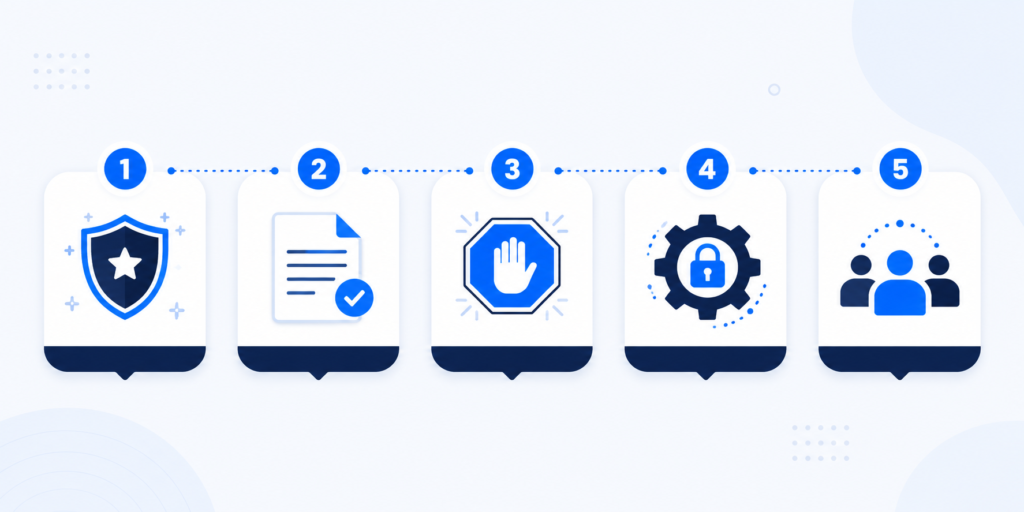
| Step | What It Prevents | Effort to Implement |
|---|---|---|
| Enterprise tier | Data used for model training | Low — a plan upgrade |
| Data Processing Agreement | Unclear vendor accountability | Low — request from vendor |
| Input limits | Accidental sensitive data exposure | Medium — needs clear categories |
| Technical controls | Human error at the point of upload | Medium to high |
| Team training | Well-intentioned mistakes | Low — one focused session |
The first two steps above become much clearer once you know exactly what to ask a vendor — our companion guide on what to ask an AI vendor before sharing customer data covers that directly. And once you’ve decided what’s safe to share, our guide on how to create an AI usage policy turns that into something your team can actually follow.
Common Mistakes When Protecting Business Data With AI Tools
- Assuming free and paid tiers handle data the same way. They frequently don’t.
- Never asking a vendor for a Data Processing Agreement before connecting sensitive data.
- Writing a policy without any technical enforcement behind it.
- Treating this as an IT-only problem instead of training every team that touches customer or financial data.
- Waiting for an incident before taking any of these steps seriously.
Frequently Asked Questions
Is it safe to use free AI tools for business tasks?
For low-stakes, non-sensitive work, often yes. For anything involving customer, financial, or proprietary data, an enterprise tier with a clear data policy is the safer default.
What’s the fastest way to start protecting business data when using AI tools?
Confirm whether your team is on enterprise or free-tier AI accounts today — it’s the single highest-leverage change, and usually the fastest one to make.
Does the EU AI Act apply to businesses outside the EU?
It can, if you handle data belonging to EU customers or operate in EU markets, similar to how GDPR extended beyond EU-based companies. Worth confirming with legal counsel if there’s any EU customer overlap.
Conclusion
None of the five steps to protect business data when using AI tools require a large security budget — an enterprise plan, a signed agreement, clear limits, available technical controls, and a short training session cover most of the real risk. Start with confirming your team’s current AI tier this week, and build outward from there.
📌 This is the pillar guide for our AI Guides & Tutorials series on data security. Go deeper with What to Ask an AI Vendor Before Sharing Customer Data and How to Create an AI Usage Policy for Your Team.