
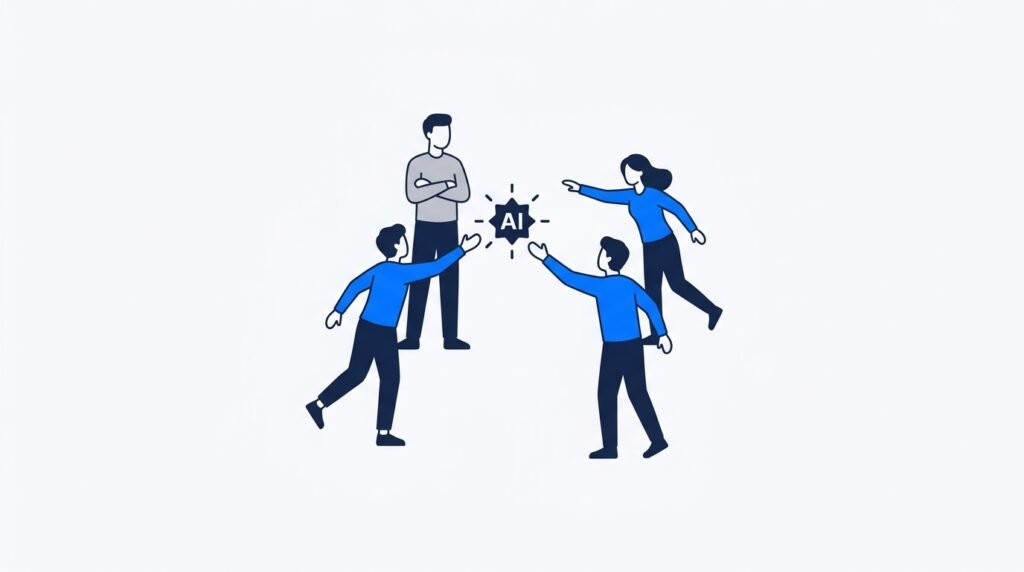
Deploying AI and getting your team to actually use it well are two completely different problems — learning how to get your team to adopt AI matters because most businesses have solved the first one and stalled on the second. McKinsey research found that 88% of organizations use AI in at least one business function, but only 6% generate meaningful EBITDA impact from it. Prosci’s study of over 1,100 professionals points directly at why: user proficiency — the human side of learning, prompting, and training — accounted for roughly 38% of reported AI implementation difficulties, more than double the 16% attributed to purely technical issues.
This guide covers what actually closes that gap — not another tool purchase, but the specific practices that turn access into real, sustained adoption.
Why Access Isn’t the Same as Adoption
Giving someone a login and a five-minute demo isn’t training — it’s an announcement. Most failed AI rollouts don’t fail because the tool was wrong; they fail because nobody addressed the actual human barriers: unclear benefit, no time carved out to practice, and no visible support from the people the team looks to for cues about what actually matters.
The businesses in that successful minority treat adoption as its own project, with its own plan, rather than an assumed side effect of simply making a tool available.
How to Get Your Team to Adopt AI: The Core Approach
- Answer "what’s in it for me" specifically, not with a company-wide efficiency statistic nobody personally feels.
- Carve out real practice time, not just access — adoption competes with an already-full workday.
- Identify champions within the team, not just leadership announcing a mandate from above.
- Make the tool fit real work, not a generic use case that doesn’t match what the team actually does daily.
- Treat adoption as ongoing, not a one-time rollout that’s considered finished after week one.
4 Practices That Actually Drive AI Adoption
Lead With a Specific, Personal "What’s In It For Me"
"This will make the company more efficient" doesn’t move anyone personally. "This cuts twenty minutes off the report you dread every Friday" does. Specificity at the individual task level is consistently what separates genuine enthusiasm from polite compliance in how to get your team to adopt ai efforts.
Build in Practice Time, Not Just Access
A tool added to an already-full plate competes with existing deadlines and usually loses. Blocking dedicated, protected time to actually practice — not "whenever you get a chance" — is one of the most reliable predictors of whether adoption actually sticks past the first week.
Find Champions Inside the Team, Not Just Announcements From Above
People trust a peer who’s found genuine value in a tool more than a top-down mandate. Identifying and supporting a few early, credible champions within the actual team using the tool tends to spread adoption faster than any company-wide announcement.
Fit the Tool to Real Work, Not a Generic Demo
A demo built around someone else’s use case rarely lands. Training built around the team’s own actual recurring tasks — their real emails, their real reports — shows relevance immediately in a way a generic walkthrough never quite does.
Where the Adoption Gap Actually Lives
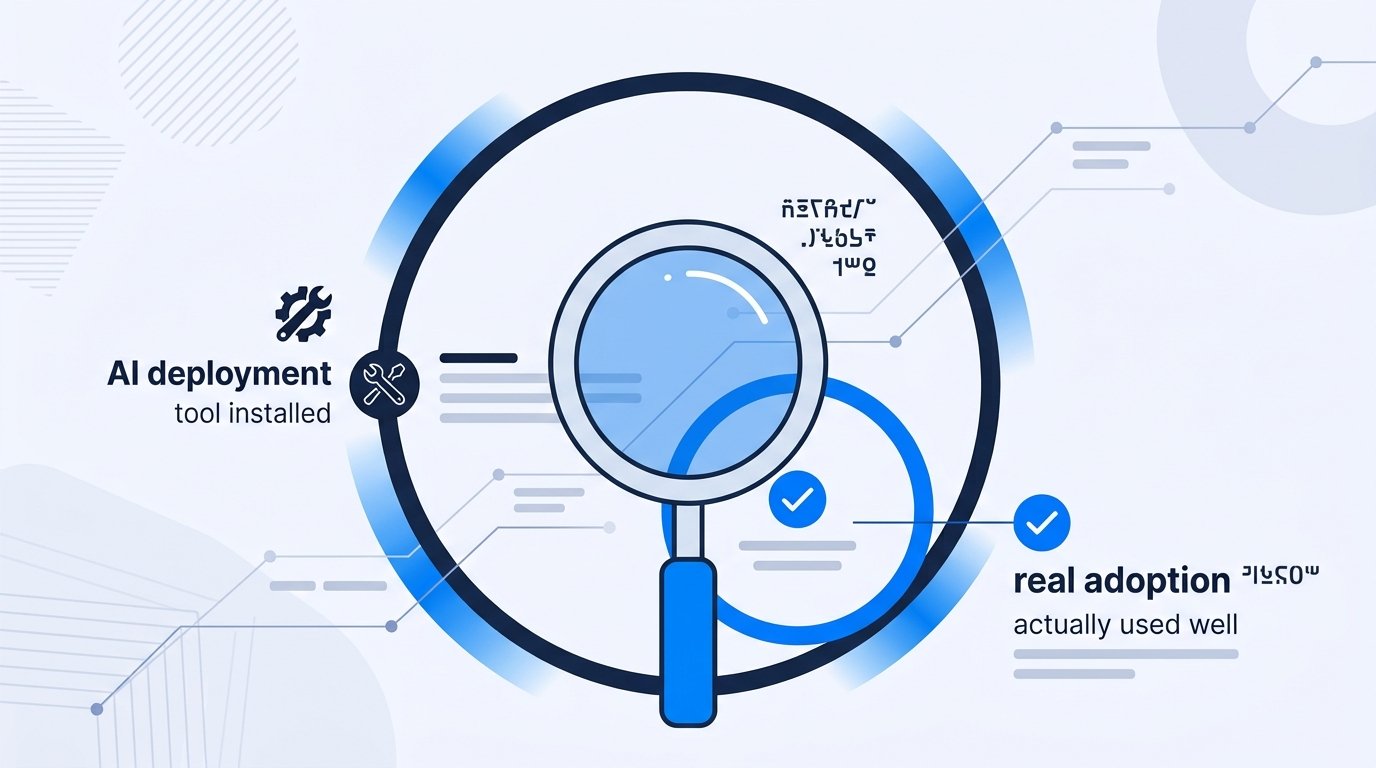
Here’s a simple way to visualize why so many rollouts stall between "deployed" and "genuinely adopted."
| Practice | What It Fixes | Effort Required |
|---|---|---|
| Personal "what’s in it for me" | Vague, unfelt benefit | Low — a conversation, not a program |
| Protected practice time | Tool competing with existing workload | Medium — needs calendar commitment |
| Internal champions | Top-down mandate fatigue | Low to medium |
| Real-task-based training | Generic demos that don’t stick | Medium — needs prep time |
These four practices look different depending on your team — our companion guide on how to train a non-technical team on AI covers the practical training side directly, and if resistance itself is the bigger blocker, see our guide on how to overcome resistance to AI change.
Common Mistakes That Stall AI Adoption
- Treating a rollout as finished after the initial announcement.
- Leading with company-wide efficiency stats instead of a personal, task-level benefit.
- Giving access without any protected practice time.
- Relying only on top-down mandates instead of cultivating peer champions.
- Using a generic demo instead of training built around the team’s actual recurring work.
Frequently Asked Questions
Why do AI rollouts fail even when the tool works well?
Because the tool was never the real bottleneck — Prosci’s research found user proficiency and training issues cause more than double the implementation difficulties that technical problems do.
How long does it take to see real AI adoption, not just usage?
Meaningful adoption typically takes several weeks of protected practice and reinforcement, not a single onboarding session — treating it as ongoing rather than one-time is central to how to get your team to adopt ai successfully.
Do I need a formal change management program to drive adoption?
Not necessarily a formal program, but you do need the core elements — a clear personal benefit, protected time, and visible champions — whether or not you call it "change management."
Conclusion
The gap between 88% adoption and 6% real impact isn’t a technology problem — it’s exactly what learning how to get your team to adopt AI is meant to solve. Lead with a specific personal benefit, protect real practice time, find internal champions, and keep reinforcing it past week one. That combination is what separates the successful minority from the majority stuck somewhere in between.
📌 This is the pillar guide for our AI Guides & Tutorials series on adoption. Go deeper with How to Train a Non-Technical Team on AI Tools and How to Overcome Resistance to Change When Implementing AI.