
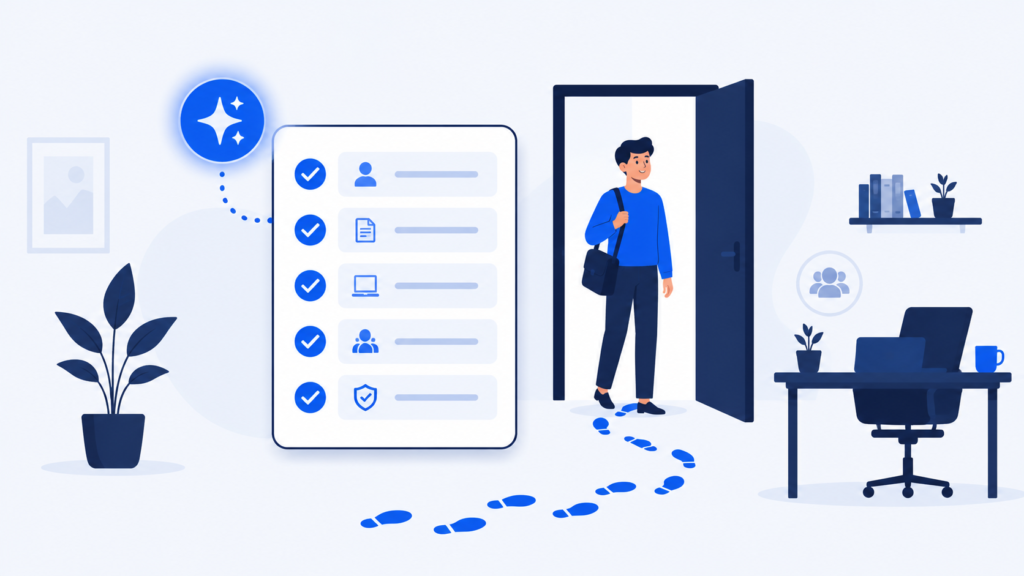
Recruiting gets most of HR’s AI attention, but the best AI tools for employee onboarding may matter just as much for retention — a new hire’s first 90 days shape whether they stay well past their first year. Per SHRM’s State of AI in HR research, HR technology use trails only recruiting among AI use cases, with onboarding and early employee support among the fastest-growing applications inside that category.
This guide covers where AI actually helps in onboarding — and where a human touch still matters more than automation.
Why Onboarding Is a High-Leverage Place for AI
Onboarding is full of exactly the kind of repetitive, document-heavy, time-sensitive work AI handles well: paperwork tracking, policy Q&A, scheduling check-ins, and making sure nothing on a long checklist gets missed during a new hire’s busiest, most overwhelming weeks.
Done well, this frees up managers and HR to spend that early time on the things AI can’t do — building relationships, explaining team culture, and answering the questions a new hire is too nervous to ask a chatbot.
How to Choose the Best AI Tools for Employee Onboarding
- Does it handle paperwork and checklist tracking, or just answer questions?
- Can it flag early disengagement signals before a 90-day check-in, not just after?
- Does it integrate with your HRIS and payroll systems? Manual re-entry defeats the purpose.
- Does it personalize by role, or send the same generic checklist to everyone?
- Is there a clear point where a human takes over for anything sensitive or personal?
Best AI Tools for Employee Onboarding, by Function
BambooHR — Best for All-in-One Onboarding Workflows
BambooHR’s onboarding module combines document collection, task tracking, and new-hire portals in one system already used for broader HR management, reducing the need for a separate onboarding-specific tool.
Leena AI — Best for Employee Policy Q&A
Leena AI’s conversational assistant handles the repetitive policy and benefits questions that otherwise land on an HR generalist dozens of times a week, freeing that time for higher-judgment onboarding work.
Lattice — Best for Early Engagement and Check-In Tracking
Lattice’s AI-supported check-ins help flag early disengagement signals during a new hire’s first 90 days, which is one of the most reliable ways to use best ai tools for employee onboarding to actually improve retention, not just paperwork speed.
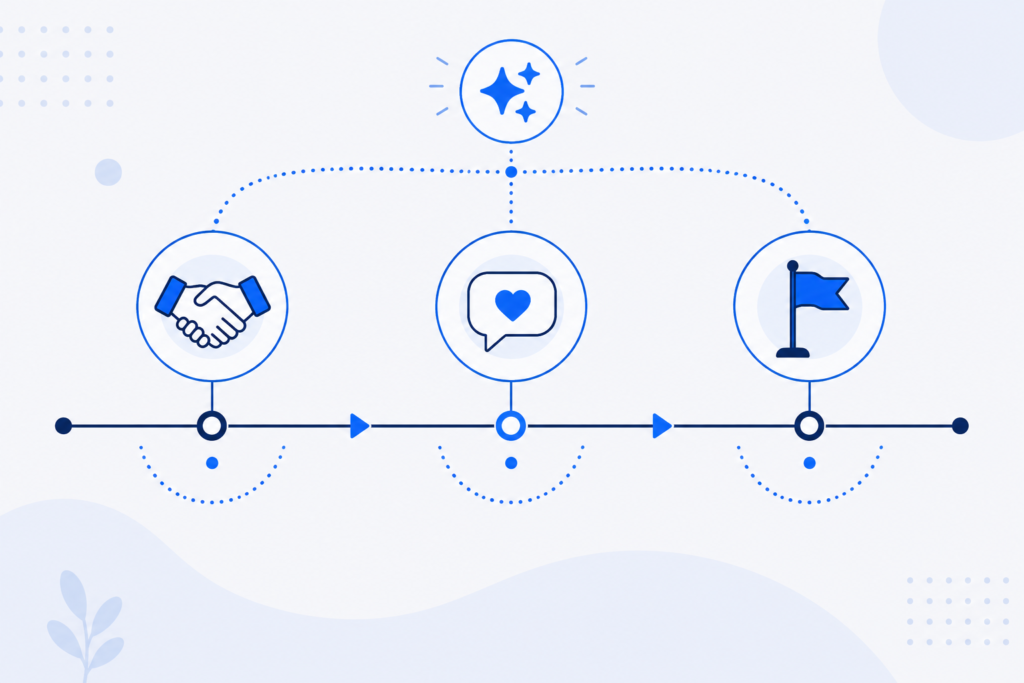
What a 90-Day AI-Supported Onboarding Path Looks Like
Here’s a simple version of that timeline — automated where it should be, human where it needs to be.
| Tool | Best For | Core Strength |
|---|---|---|
| BambooHR | All-in-one onboarding workflow | Document + task tracking combined |
| Leena AI | Employee policy Q&A | Reduces repetitive HR questions |
| Lattice | Early engagement tracking | Flags disengagement before it’s a problem |
Common Mistakes With AI-Powered Onboarding
- Automating the entire experience, leaving no human touchpoint in a new hire’s first weeks.
- Sending the same generic checklist to every role instead of personalizing by department.
- Not connecting onboarding data to HRIS or payroll, creating duplicate manual entry.
- Waiting until a 90-day review to check engagement instead of catching signals earlier.
- Treating onboarding as a one-time task list instead of an ongoing relationship-building process.
Frequently Asked Questions
What are the best AI tools for employee onboarding?
BambooHR leads for all-in-one workflow management, Leena AI for policy Q&A, and Lattice for engagement tracking through a new hire’s first 90 days. Most teams benefit from combining at least two.
Can AI onboarding tools replace a manager’s role in onboarding?
No — they handle the paperwork and repetitive questions well, but relationship-building and culture context still need a human, especially in a new hire’s first few weeks.
Do small companies need dedicated onboarding AI tools?
Not always — for very small teams, a well-organized checklist and a general assistant like Claude or ChatGPT for drafting welcome materials may cover it before a dedicated platform is justified.
Conclusion
The best AI tools for employee onboarding aren’t the ones that automate everything — they’re the ones that clear the repetitive work so managers can spend a new hire’s first weeks on what actually builds retention. Start with whichever part of onboarding eats the most time today, and keep a clear human touchpoint where it matters most. For the full HR picture, see our pillar guide to best AI tools for HR.
📌 This article is part of our Best AI Tools series on HR. It supports our pillar guide, Best AI Tools for HR in 2026, and pairs with Best AI Tools for Recruiting for the stage before someone joins your team.